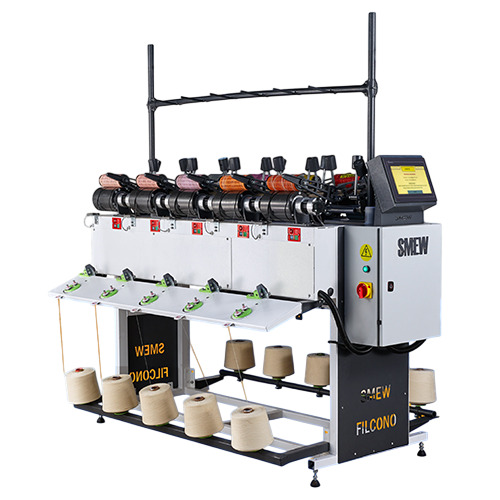
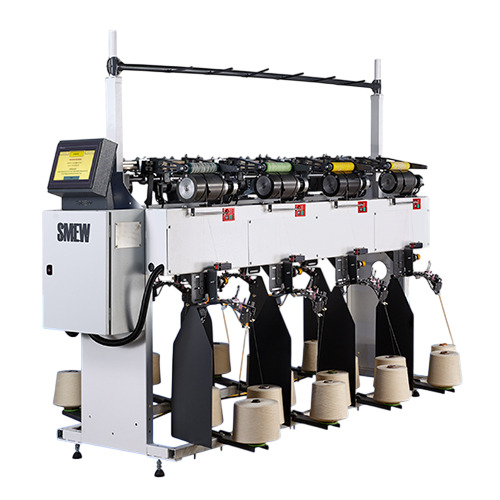
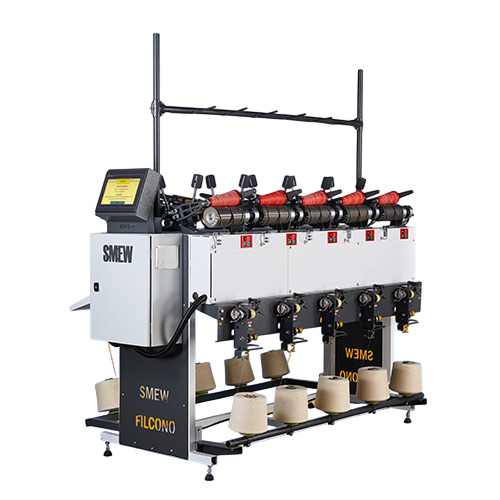
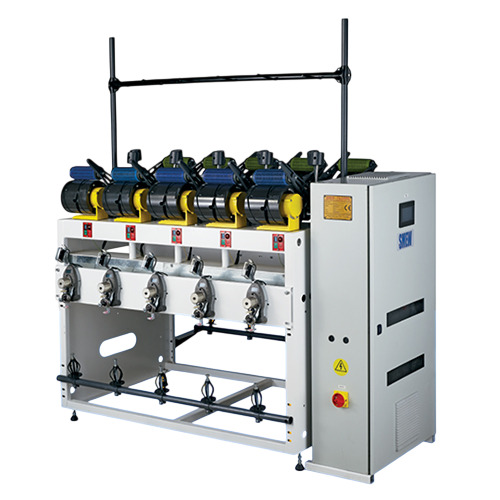
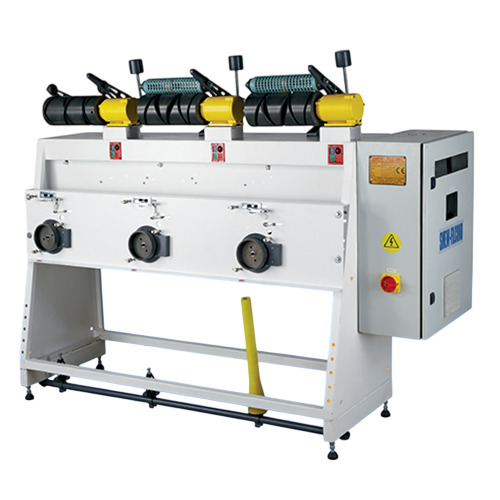
About BMS Soft Textile Winding Machine
TECHNICAL SPECIFICATIONS
MACHINE : SOFT WINDING MACHINE
MODEL NO. BMS
- MACHINE ARRANGEMENT DOUBLE SIDED
- BRUSHLESS MOTOR ON EVERY SPINDLE WITH DIRECT DRIVE TO DRUM FOR LOWEST POWER CONSUMPTION AND MAINTAINENCE.
- BRUSHLESS MOTOR MADE IN INDIA
- INPUT POWER 380V/415V AC THREE PHASE + N + E
- WIDTH 1250mm
- INDIVIDUAL BLDC MOTOR FOR EVERY SPINDLE
- STEPLESS SPEED VARIATION FROM 0 TO 1200 MPM BY CONVERTER ON INDIVIDUAL SPINDLE
- SPECIALISED ANTI PATTERNING SOFTWARE OPTIMISED FOR BLDC MOTOR FOR HI QUALITY ANTI PATTERNING
- ANTI PATTERNING PROGRAMME IS OF FAR SUPERIOR QUALITY COMPARED WITH AC INDUCTION MOTORS
- MAX FED PACKAGE - 280MM
- YARN SENSING BY ELECTRONIC NON CONTACT TYPE YARN DETECTOR
- AUTO STOP ON YARN BREAKAGE
- HARD ALUMINIUM ANODIZED DRUMS WITH 125MM OD / 1.5 TURNS
- PRECISION DRUM 6 TRAVERSE (148mm) made inhouse on the highest quality CNC machines with variation between drums less than 0.1mm
- DOUBLE SIDED PACKAGE HOLDERS
- MAIN PANEL WITH TOUCH SCREEN FOR SETTING LENGTH AND SPEED
- PACKAGE CONTROL BY LENGTH BY MAGNETIC ENCODER
- FULL SIZE FEED PACKAGE SEPERATOR
- ADJUSTABLE CIRCULAR DISC CLEANER (SLUB CATCHER) FOR EASY CHANGE OF SLOT AT COUNT CHANGE
Advanced Yarn Winding TechnologyThe BMS Soft Textile Winding Machine features a digital display and PLC control, guaranteeing precise management and seamless operation for a range of yarn types. Its automatic electronic tension control and centralized lubrication system optimize performance while minimizing manual intervention. The noise level remains below 70 dB, ensuring a quiet work environment, and safety protocols like overload protection and emergency stop safeguard workers and machinery alike.
Versatile and High Capacity DesignSupporting 24 customizable spindles and speeds up to 1200 m/min, this machine meets diverse production requirements for small and large-scale operations. It efficiently processes various materials-cotton, wool, polyester, silk, and rayon-forming cheese packages up to 290 mm in diameter. With a capacity of 500-1000 kg/day, it is a robust yet compact solution that suits modern textile manufacturing needs.
FAQ's of BMS Soft Textile Winding Machine:
Q: How does the BMS Soft Textile Winding Machine control yarn tension during operation?
A: The machine utilizes an automatic electronic yarn tension control system, ensuring consistent and adjustable tension throughout the winding or rewinding process. This feature improves package quality and helps reduce yarn breakage, enhancing overall productivity.
Q: What types of yarns can be processed with this machine?
A: The BMS Soft Textile Winding Machine supports cotton, blended, wool, polyester, silk, and rayon yarns, making it suitable for various textile sectors requiring versatile winding solutions.
Q: When should the centralized automatic lubrication system be maintained?
A: The automatic lubrication system is designed for continuous operation, requiring minimal manual intervention. It is recommended to inspect and refill the lubrication tank or check for system blockages during routine maintenance cycles, as specified in the user manual.
Q: Where is the BMS Soft Textile Winding Machine manufactured and supplied?
A: This machine is manufactured in India and is available for export, making it accessible to textile producers, exporters, and suppliers both locally and internationally.
Q: What safety features are included in this winding machine?
A: To ensure operator safety, the machine is equipped with an emergency stop button and overload protection, which help prevent accidents and protect both personnel and equipment during use.
Q: How can the number of spindles be customized for different production needs?
A: The number of spindles on the BMS machine can be adapted, allowing clients to choose the configuration-up to 24 spindles-that matches their production scale, ensuring cost-effectiveness and flexibility.
Q: What are the operational benefits of using the PLC control panel and digital display?
A: The PLC control panel provides precise, programmable management of machine functions, while the digital display enables operators to easily monitor key parameters and adjust settings for optimal performance and reliability.





 Send Inquiry

 Send Inquiry